
Article: Traditional vs. Infrared Saunas: Benefits, Differences & Which Is Right for You?
Traditional vs. Infrared Saunas: Benefits, Differences & Which Is Right for You?
Discover how two approaches to sauna bathing can support relaxation, circulation, muscle comfort, and a more intentional wellness lifestyle.
Imagine coming home after a demanding day and stepping into a beautifully crafted sauna. The warmth surrounds you, your muscles begin to relax, and everyday distractions gradually fade away.
For generations, sauna bathing has been valued as a way to unwind and reconnect with personal well-being. Today, traditional and infrared saunas make that experience accessible in many modern homes.
But beyond the luxury and relaxation, what does scientific research tell us about the potential benefits of sauna bathing? And is one type better than the other?
Let's explore the differences, benefits, and research behind both.
1. Understanding Traditional Saunas
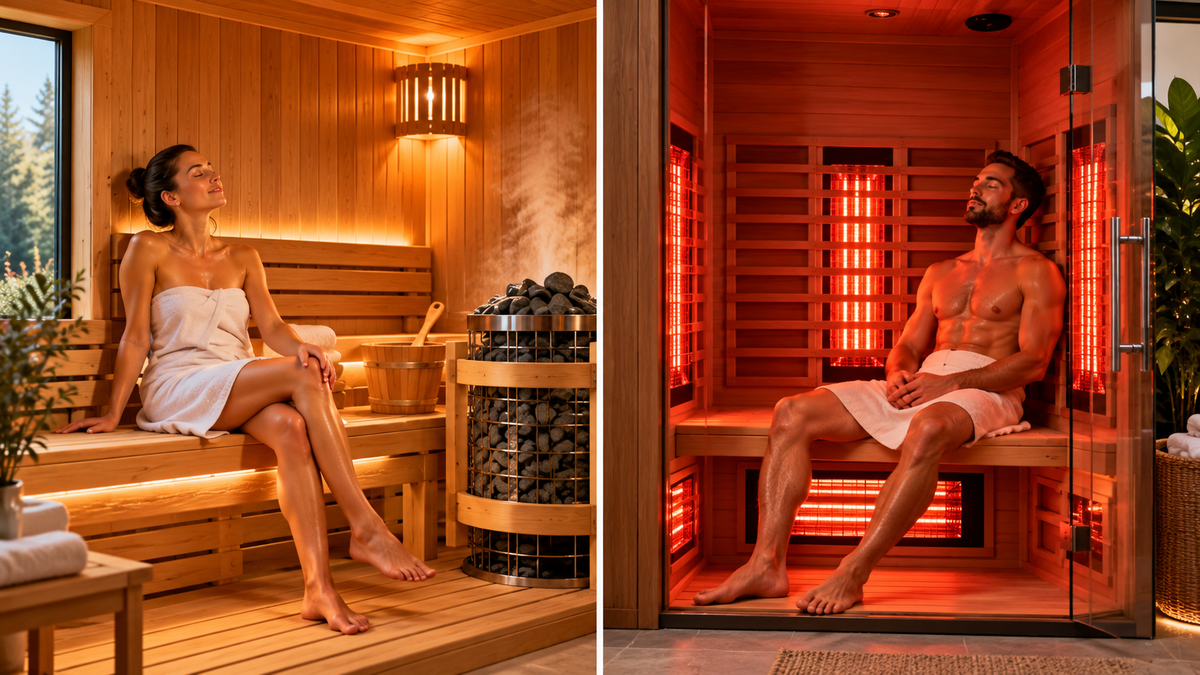
Traditional saunas, closely associated with Finnish wellness culture, use a heater and sauna stones to warm the surrounding air.
Depending on the design, the heater may be electric or wood-burning. Water can be poured over suitable heated stones to create brief bursts of steam, increasing the sensation of heat.
Traditional saunas generally operate at approximately 150–195°F (65–90°C).
What makes traditional saunas special?
-
Higher temperatures for an immersive heat experience.
-
Heated sauna stones and optional steam bursts.
-
Beautiful wood interiors and traditional craftsmanship.
-
Indoor, outdoor, and barrel sauna designs.
-
A long history of cultural use and scientific study.
Traditional saunas appeal to people who enjoy intense warmth, the ritual of sauna bathing, and a classic spa-like atmosphere.
2. Understanding Infrared Saunas
Infrared saunas use radiant heaters to transfer energy directly to the body and surrounding surfaces, rather than relying primarily on heating the air.
Most home infrared saunas operate at approximately 110–140°F (43–60°C), although temperatures vary by model.
What makes infrared saunas special?
-
Lower air temperatures that many users find comfortable.
-
Radiant heat exposure.
-
Often shorter warm-up times.
-
Compact models suitable for indoor wellness spaces.
-
Convenient electronic temperature and timer controls.
Some infrared saunas use far-infrared heaters, while others offer near-, mid-, and far-infrared technology. These features vary by manufacturer.
Infrared saunas are particularly appealing to those who prefer a gentler-feeling heat experience without giving up the relaxing ritual of sauna bathing.
3. The Wellness Benefits of Sauna Bathing
Benefit 1: Supports relaxation and stress management
One of the most immediately appreciated benefits of sauna bathing is the opportunity to relax.
Warmth, a peaceful environment, and time away from daily distractions can help people unwind and release feelings of physical tension.
For many sauna enthusiasts, a session becomes a personal wellness ritual—an opportunity to slow down, practice mindfulness, and recharge.
Traditional sauna: Provides an immersive, high-temperature environment, often accompanied by the calming ritual of water and heated stones.
Infrared sauna: Offers radiant warmth at lower air temperatures, which some users may find more comfortable for relaxation.
Research has explored sauna bathing's effects on stress-related symptoms and quality of life, although larger controlled studies are needed to establish the extent of these benefits.
Benefit 2: Encourages circulation and cardiovascular responses
As the body warms during sauna bathing, blood vessels near the skin widen, blood flow changes, and heart rate typically increases.
These responses help the body regulate its temperature.
Researchers are investigating whether repeated heat exposure may contribute to beneficial cardiovascular adaptations.
A 2018 review published in Mayo Clinic Proceedings discussed associations between regular Finnish sauna bathing and favorable cardiovascular outcomes, including blood-pressure and vascular-health measures.
Traditional sauna: Has a substantial body of observational research examining long-term cardiovascular outcomes.
Infrared sauna: Has been studied in smaller clinical trials involving vascular function and cardiovascular measures, including specialized medical heat-therapy protocols.
What the evidence means: Sauna bathing may complement a healthy lifestyle, but it is not a substitute for exercise, blood-pressure treatment, or other medical care.
Benefit 3: May help ease muscle stiffness and support recovery
After physical activity, warmth can feel especially comforting.
Heat exposure may help muscles relax and temporarily ease feelings of stiffness, making sauna bathing an appealing addition to a post-workout wellness routine.
Traditional sauna: Offers intense surrounding warmth for people who enjoy a high-temperature recovery ritual.
Infrared sauna: Provides radiant warmth at lower temperatures, which some users may prefer after exercise.
Researchers have explored sauna use in athletic recovery and physical performance, but results are still too limited to establish which sauna type provides superior recovery benefits.
For the best overall recovery routine, combine comfortable heat exposure with appropriate hydration, nutrition, sleep, and rest.
Benefit 4: May support cardiovascular wellness over time
One of the most interesting areas of sauna research involves long-term cardiovascular health.
Finnish observational studies have found associations between more frequent traditional sauna bathing and lower rates of certain cardiovascular outcomes.
These findings have attracted considerable scientific interest because sauna bathing produces physiological responses involving heart rate, blood circulation, and blood-vessel function.
However, an association does not prove that sauna use causes a reduction in cardiovascular disease. Lifestyle factors and other differences between participants may contribute to the results.
For infrared saunas, researchers have investigated cardiovascular measures in smaller studies, including supervised far-infrared heat therapy.
The findings are encouraging, but the evidence is not sufficient to conclude that ordinary home infrared sauna use provides the same long-term outcomes observed in Finnish sauna populations.
Benefit 5: May contribute to a better evening relaxation routine
A peaceful sauna session can help create a transition between a busy day and a restful evening.
Many sauna users report feeling relaxed afterward, and heat exposure may influence the body's temperature-regulation processes.
These effects could contribute to a calming bedtime routine.
Traditional sauna: May appeal to those who enjoy a more intense evening heat ritual.
Infrared sauna: May be preferable for users who find lower-temperature warmth more relaxing.
Although sauna use is sometimes associated with better perceived sleep, more high-quality research is needed to establish consistent improvements in clinical sleep outcomes.
Wellness idea: Pair a comfortable sauna session with hydration, gentle stretching, reduced screen time, and a quiet environment.
Benefit 6: Encourages sweating and a refreshing wellness experience
Both traditional and infrared saunas stimulate sweating as the body works to regulate its temperature.
Sweating can leave users feeling refreshed after a session and shower.
However, the popular claim that sauna sweating significantly detoxifies the body is not well established.
The liver and kidneys are responsible for most toxin processing and elimination. Sauna bathing should not be viewed as a replacement for these functions.
The more established reasons to enjoy sauna bathing include warmth, relaxation, and the physiological responses associated with heat exposure.
Benefit 7: May support comfort for people experiencing everyday aches
Warmth has long been used to promote physical comfort.
Researchers have investigated sauna bathing and controlled heat therapy in relation to pain, stiffness, and quality of life.
A systematic review published in 2018 identified potentially beneficial findings in some studies involving rheumatological and chronic pain conditions.
However, the studies were generally small and varied considerably in their methods.
For everyday wellness, a sauna can offer a soothing environment for relaxation, but it should not be marketed as a treatment for arthritis, fibromyalgia, or other medical conditions.
Benefit 8: Research is exploring potential cognitive-health associations
Traditional Finnish sauna research has also examined the relationship between sauna frequency and cognitive health.
A 2017 study in Age and Ageing followed 2,315 middle-aged Finnish men and found that more frequent sauna bathing was associated with lower observed rates of dementia and Alzheimer's disease during long-term follow-up.
This is an interesting finding, but it does not establish that sauna bathing prevents dementia.
The research was observational and involved a specific male population. Further studies are needed to determine whether the association is causal or applies to other populations.
Comparable long-term evidence has not been established for home infrared saunas.
Benefit 9: Makes personal wellness more convenient at home
Beyond the scientific research, home sauna ownership offers practical lifestyle advantages.
A dedicated sauna can make it easier to create a consistent relaxation routine without traveling to a spa or wellness center.
A home sauna may complement:
-
A personal fitness and recovery space.
-
A relaxing evening routine.
-
A luxury bathroom or home spa.
-
A dedicated backyard wellness retreat.
-
A quiet space for mindfulness and self-care.
The right sauna becomes more than a piece of equipment—it becomes part of how you choose to spend time caring for yourself.
4. Traditional vs. Infrared Saunas: At a Glance
| Feature | Traditional Sauna | Infrared Sauna |
|---|---|---|
| Heating method | Heated air and sauna stones | Infrared radiant heaters |
| Typical temperature | 150–195°F | 110–140°F |
| Humidity | Dry heat with optional steam bursts | Generally dry |
| Heat experience | Intense surrounding warmth | Radiant warmth at lower air temperatures |
| Warm-up time | Often longer | Often shorter |
| Cardiovascular research | More extensive long-term observational evidence | Smaller clinical studies and specialized heat-therapy research |
| Muscle comfort | Warmth may help ease stiffness | Warmth may help ease stiffness |
| Home installation | Varies by heater and structure | Often compact, but requirements vary |
| Best for | Classic sauna enthusiasts | Those preferring lower-temperature radiant warmth |
These are general characteristics. Always compare individual models and their manufacturer specifications.
5. Which Sauna Is Better for Your Wellness Goals?
For traditional sauna enthusiasts: A Finnish-style sauna may be the ideal choice if you enjoy high temperatures, sauna stones, and the classic bathing ritual.
For lower-temperature comfort: An infrared sauna may be more appealing if you prefer radiant warmth without extremely hot surrounding air.
For muscle recovery: Both provide warmth and may contribute to a relaxing recovery routine. Neither has been established as universally superior.
For cardiovascular research: Traditional Finnish saunas have stronger long-term observational evidence, while infrared saunas have a smaller body of clinical research.
For compact indoor spaces: Many infrared saunas are designed for smaller rooms, although compact traditional models are also available.
For an outdoor wellness retreat: Traditional outdoor and barrel saunas offer distinctive architectural and lifestyle appeal.
6. Are Traditional or Infrared Saunas More Energy-Efficient?
Infrared saunas often operate with lower-powered heaters and may use less electricity for some sessions.
Traditional saunas typically heat the cabin air to higher temperatures and may require more warm-up time.
However, actual energy use depends on:
-
Heater power and efficiency.
-
Cabin dimensions and insulation.
-
Warm-up duration.
-
Session length.
-
Room or outdoor temperature.
-
Frequency of use.
Compare the electrical specifications of individual models rather than assuming that every infrared sauna costs less to operate.
7. Sauna Safety: Enjoying Heat Responsibly
Both traditional and infrared saunas can be enjoyable for many healthy adults when used appropriately.
A few sensible precautions are important:
-
Begin with shorter sessions and moderate settings.
-
Stay adequately hydrated.
-
Avoid alcohol before and during sauna use.
-
Leave the sauna if you feel dizzy, faint, nauseated, or unwell.
-
Follow the manufacturer's instructions for temperature, session duration, and ventilation.
-
Seek medical guidance before sauna use if pregnant or managing a cardiovascular condition, blood-pressure concerns, or other significant health issues.
People with unstable medical conditions should not assume sauna bathing is safe simply because it is a wellness activity.
8. Creating Your Own Wellness Retreat
Whether you prefer the traditional atmosphere of heated sauna stones or the gentle-feeling warmth of infrared technology, your sauna should reflect your space, preferences, and lifestyle.
Imagine a handcrafted outdoor sauna surrounded by natural landscaping, or a modern infrared cabin integrated into a beautifully designed home wellness room.
At Sauna Health Plus, we believe wellness spaces should combine comfort, quality, and thoughtful design.
Explore our Traditional Sauna Collection or Infrared Sauna Collection to discover the sauna experience that best suits your home.
9. Frequently Asked Questions
Are traditional saunas healthier than infrared saunas?
Research does not establish that one type is universally healthier. Traditional Finnish sauna bathing has more extensive long-term observational research, while infrared saunas have been investigated in smaller clinical studies.
Do infrared saunas provide cardiovascular benefits?
Some clinical studies of far-infrared heat therapy have reported favorable cardiovascular measures. However, these results do not prove that all home infrared saunas prevent cardiovascular disease.
Which sauna is better after a workout?
Both may provide soothing warmth and help users relax after physical activity. The better choice depends on your heat tolerance and preferred experience.
Can saunas improve sleep?
Many people find sauna bathing relaxing as part of an evening routine, but evidence for consistent improvements in sleep outcomes remains limited.
Do saunas remove toxins?
Sweating is a normal cooling mechanism. There is insufficient evidence that sauna use meaningfully detoxifies the body.
Can beginners use either type of sauna?
Yes, many healthy adults can begin with short, comfortable sessions, following the manufacturer's instructions. People with relevant health concerns should obtain medical guidance first.
Final Thoughts: Two Experiences, One Commitment to Wellness
Traditional and infrared saunas offer different ways to experience the comfort of heat.
Traditional saunas provide a classic, high-temperature experience rooted in generations of Finnish bathing culture. Infrared saunas offer radiant warmth at lower air temperatures and can be a convenient addition to modern home wellness spaces.
Both may support relaxation, physical comfort, and enjoyable self-care routines. Scientific research continues to explore the wider health implications of repeated sauna use.
Ultimately, the best sauna is the one that suits your comfort, home, and lifestyle.
Your home. Your wellness. Your sauna experience.
Explore premium wellness solutions at Sauna Health Plus.
References & Research
-
Laukkanen, J. A., Laukkanen, T., & Kunutsor, S. K. (2018). Cardiovascular and Other Health Benefits of Sauna Bathing: A Review of the Evidence. Mayo Clinic Proceedings, 93(8), 1111–1121. https://pubmed.ncbi.nlm.nih.gov/30077204/
-
Hussain, J., & Cohen, M. (2018). Clinical Effects of Regular Dry Sauna Bathing: A Systematic Review. Evidence-Based Complementary and Alternative Medicine, 2018, 1857413. https://pmc.ncbi.nlm.nih.gov/articles/PMC5941775/
-
Laukkanen, T., et al. (2017). Sauna bathing is inversely associated with dementia and Alzheimer's disease in middle-aged Finnish men. Age and Ageing, 46(2), 245–249. https://pubmed.ncbi.nlm.nih.gov/27932366/
-
Beever, R. (2009). Far-infrared saunas for treatment of cardiovascular risk factors: Summary of published evidence. Canadian Family Physician, 55(7), 691–696. https://pmc.ncbi.nlm.nih.gov/articles/PMC2718593/
Medical disclaimer: This article is for general educational purposes only and does not constitute medical advice. Sauna bathing is not a substitute for medical diagnosis, treatment, or professional healthcare. Individual responses and risks vary.

Leave a comment
This site is protected by hCaptcha and the hCaptcha Privacy Policy and Terms of Service apply.